

Your smartphone is likely your most-used camera, capturing everything from family gatherings to important documents. But with manufacturers throwing around terms like "108MP" and "computational photography," how do you know what actually matters? Let's cut through the marketing speak and focus on what will genuinely improve your photos.
Megapixels: The Most Misunderstood Spec
The myth: More megapixels always mean better photos.
The reality: Once you're above 12MP, you have more than enough resolution for social media, large prints, and even cropping. A 12MP camera with a quality sensor will outperform a poorly designed 108MP camera every time.
What matters more is sensor size and pixel quality. Larger pixels capture more light, which means better low-light performance and more detail where it counts. Look for phones that mention pixel size (measured in micrometers, or μm) – anything above 1.4μm is solid, and 1.8μm or higher is excellent.
Aperture: Let There Be Light
The aperture controls how much light enters your camera, and it's expressed as an f-number (like f/1.8 or f/2.2). Here's the counterintuitive part: lower numbers mean more light.
An f/1.8 aperture lets in significantly more light than f/2.2, which translates to:
- Better performance in dim restaurants and evening scenes
- More background blur for portrait-style shots
- Faster shutter speeds to freeze motion
For your main camera, look for f/1.8 or lower. Anything above f/2.0 will struggle once the sun goes down.
Optical Image Stabilization: Your Anti-Shake Insurance
Optical Image Stabilization (OIS) physically moves the lens or sensor to counteract hand shake. This feature is a game-changer for:
- Low-light photography (allows slower shutter speeds without blur)
- Video recording (smoother, more professional-looking footage)
- Zoom shots (steadier framing at higher magnifications)
Don't confuse this with digital or electronic stabilization, which crops and processes your image. OIS is a hardware feature that makes a tangible difference. Consider it essential if you shoot in challenging conditions or record video frequently.
Multiple Lenses: Quality Over Quantity
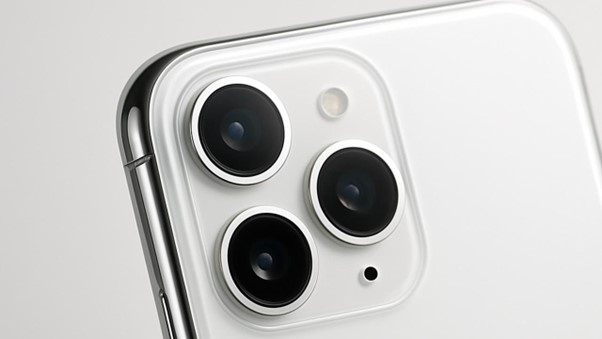
Modern phones often sport three, four, or even five cameras. But more isn't always better. Here's what actually matters:
The main lens does the heavy lifting. This should have the best sensor, widest aperture, and OIS. Everything else is secondary.
An ultrawide lens (typically 12-16mm equivalent) is genuinely useful for landscapes, architecture, and tight spaces. Look for one with at least 12MP and decent corner sharpness.
A telephoto lens provides real optical zoom. A 3x telephoto (around 70-85mm equivalent) is versatile for portraits and distant subjects. Make sure it also has OIS.
Skip the gimmicks: Macro lenses and depth sensors are often low-quality additions that pad the camera count without improving your photos. You're better off with three excellent cameras than five mediocre ones.
Night Mode and Computational Photography
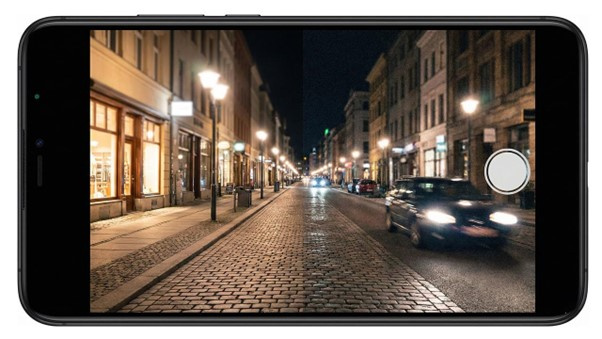
This is where modern smartphones truly shine. Computational photography uses software and AI to combine multiple exposures, reduce noise, and enhance detail in ways that were impossible just a few years ago.
Night mode is now standard, but implementation varies wildly. The best systems:
- Work automatically without requiring a tripod
- Preserve natural colors rather than creating an artificial "day for night" look
- Handle mixed lighting (like neon signs and streetlights) gracefully
You'll need to check reviews for this, as spec sheets won't tell you which night modes actually deliver.
Video Capabilities Worth Considering
If video matters to you, look for:
4K at 60fps: Smooth, high-quality footage that's future-proofed for larger displays
HDR video recording: Preserves detail in bright skies and dark shadows simultaneously
Audio quality: Often overlooked, but stereo recording and noise cancellation make a huge difference
Cinematic modes: Features like shallow depth-of-field in video and automatic focus tracking are becoming genuinely useful
The Features That Actually Matter Daily
Beyond the specs, consider these practical elements:
Shutter lag: How quickly the camera launches and captures when you tap the button. This makes the difference between capturing a moment and missing it.
Processing speed: Can you take another photo immediately, or do you wait while the phone "thinks"? This is crucial for photographing children, pets, or action.
Camera app quality: Is it intuitive? Can you quickly switch modes? Are pro controls accessible but not in the way?
Consistency: Do all the lenses produce similar color and exposure, or will you get jarring shifts when switching between them?
What to Ignore (Mostly)
These features sound impressive but rarely deliver in practice:
Extreme zoom claims: "100x zoom" is digital, heavily processed, and rarely usable. A quality 3x or 5x optical zoom is far more practical.
AI scene detection: When it works, it's subtle. When it doesn't, it oversaturates your food photos. Usually, you're better off with good auto settings.
Excessive megapixels: As mentioned, 12-50MP is the sweet spot. Anything higher is for specific use cases and often comes with tradeoffs.
How to Actually Test a Camera
Don't just trust the specs. If possible:
- Take photos in poor lighting – This reveals a camera's true capabilities
- Zoom in on details – Check for sharpness and noise
- Shoot moving subjects – Test autofocus and shutter speed
- Record video while walking – Evaluate stabilization
- Check the edges of ultrawide shots – Look for distortion and softness
Read reviews from photography-focused sources, not just general tech sites. Sample images tell you more than any specification list.
The Bottom Line
The best smartphone camera is the one that consistently gives you photos you're happy with, in the conditions where you actually use it. Focus on:
- A quality main sensor with a wide aperture and OIS
- Effective computational photography for challenging light
- A useful ultrawide or telephoto, not a collection of filler lenses
- Fast, responsive performance when capturing moments
Don't get caught up in specification wars. A phone with a 12MP camera, great software, and smart processing will serve you better than one boasting impressive numbers but mediocre real-world results.
Your smartphone camera should disappear into the background, letting you focus on capturing memories rather than wrestling with settings. Choose wisely, and you'll have a capable creative tool in your pocket every single day.