
If you have ever looked at the specs for headphones, speakers, smartwatches, or phones, you have probably seen ratings like IPX7 or IP68. They sound technical, but they matter a lot if you plan to use your gear outdoors, especially around water.
So what does IPX7 actually mean, and is it enough for beach use?
What IPX7 Waterproofing Actually Means
IPX7 is part of the Ingress Protection, or IP, rating system. This system measures how well a device is protected against solids like dust and liquids like water.
IPX7 specifically means:
- The device can survive immersion in fresh water
- Up to 1 metre deep
- For up to 30 minutes
The important detail is the X. It means the device has not been tested for dust protection. That does not mean it has no dust resistance, just that it was not rated for it.
IPX7 focuses purely on water immersion under controlled conditions.
What IPX7 Protects Against
IPX7 is designed to handle:
- Accidental drops into water
- Heavy rain
- Splashing
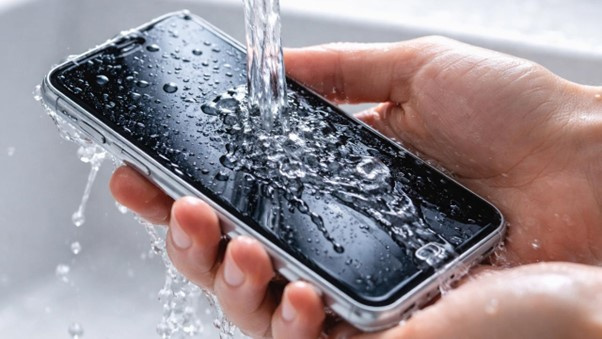
- Short periods of submersion in fresh water
This makes it well suited for things like bathroom use, poolside listening, or getting caught in the rain.
For many everyday scenarios, IPX7 is more than enough.
Where IPX7 Falls Short at the Beach
The beach introduces conditions that IPX7 is not designed for.
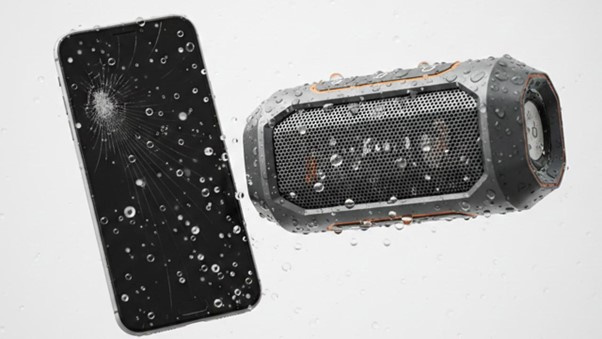
First, salt water is more aggressive than fresh water. Salt can corrode seals, charging ports, and internal components over time. IPX7 testing does not account for salt exposure.
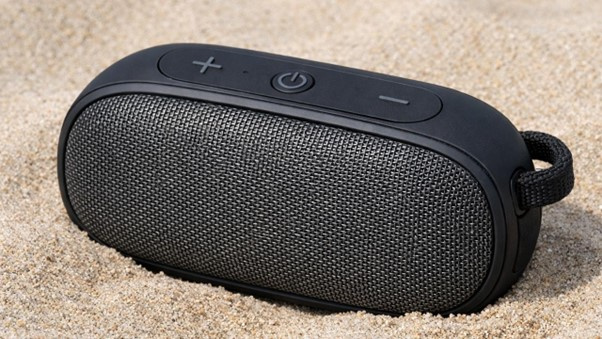
Second, sand is a major issue. Fine sand particles can work their way into buttons, speaker grilles, and seals. Because IPX7 has no dust rating, there is no guarantee the device is protected against sand ingress.
Third, waves and movement matter. IPX7 testing is done in still water. Repeated wave impact or water pressure changes can push water past seals more easily than calm immersion.
Rinsing and Drying Still Matter
Even if a device is IPX7 rated, beach use requires extra care.
If the device comes into contact with salt water or sand, it should be:
- Rinsed gently with fresh water if the manufacturer allows it
- Dried thoroughly before charging
- Kept free of sand around ports and buttons
Failing to do this can cause corrosion or damage over time, even if the device survives the initial exposure.
IPX7 vs Higher Ratings
For beach use, higher IP ratings are usually better.
Devices with ratings like IP67 or IP68 include:
- Certified dust protection
- Stronger sealing against fine particles
- Better long-term durability in harsh environments
While IPX7 handles water immersion, it does not address dust or sand, which are the biggest risks at the beach.
Is IPX7 Good Enough for the Beach?
The honest answer is: it depends on how you use it.
IPX7 is fine for:
- Occasional splashes
- Sitting under a beach umbrella
- Short exposure with careful handling
It is not ideal for:
- Full beach days with wind and blowing sand
- Swimming in the ocean
- Repeated salt water exposure
If beach use is a regular thing, a device with both water and dust protection is the safer choice.
The Bottom Line
IPX7 waterproofing offers strong protection against fresh water, but it is not designed for the full range of conditions found at the beach. Salt water, sand, and constant movement introduce risks that IPX7 does not fully cover.
For casual, careful beach use, IPX7 can be good enough. For worry-free use near the ocean, look for devices with full dust and water protection, and always follow the manufacturer’s care guidelines.