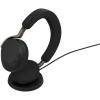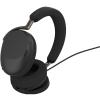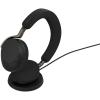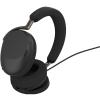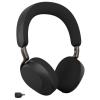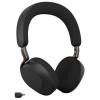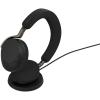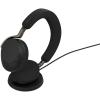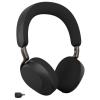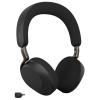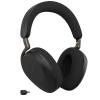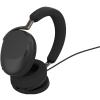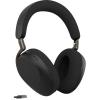

When it comes to professional headsets, ‘business-grade’ has rarely meant ‘stylish’. Traditional office headsets with bulky boom microphones can certainly sound clear, but they often look and feel like, well, office gear. Many hybrid workers have ended up using sleek consumer headphones or earbuds for calls, sacrificing call quality for comfort and aesthetics. Recognising this gap, Jabra’s new Evolve3 series aims to deliver the best of both worlds: enterprise-level performance in a modern, boom-free design. The lineup’s two models - the on-ear Evolve3 75 and the over-ear Evolve3 85 - are being positioned as the future of professional headsets for the hybrid work era.
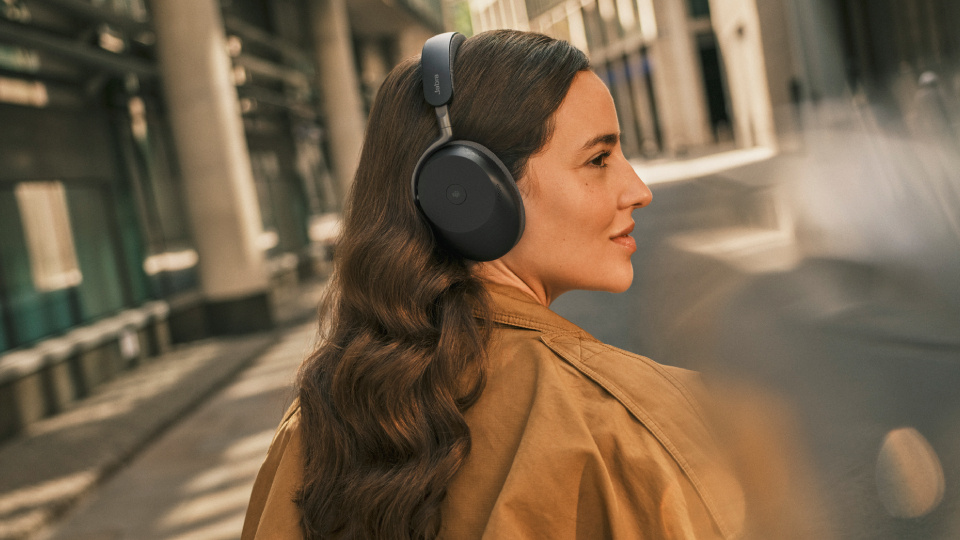
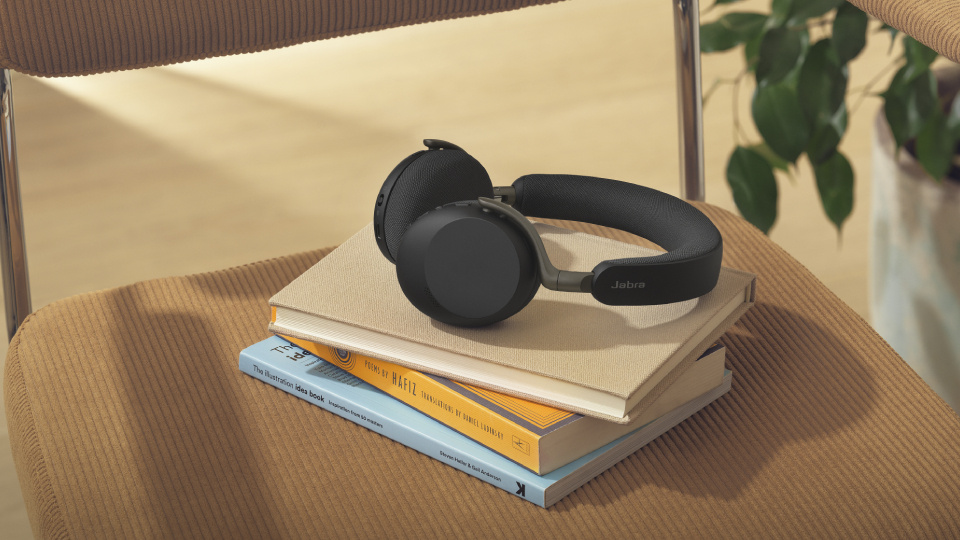
Jabra calls the Evolve3 series its “first true cross-over headset” designed for both professional and personal use. In essence, they’re business headsets that wouldn’t look out of place on a coffee shop playlist break. Both the 75 and 85 models feature a slim, boom-less silhouette and come in subdued black or a warm grey colour - far from the clunky call-centre headsets of old. This consumer-like design isn’t just about looks; it reflects how people work today. You might be on back-to-back video meetings in the morning, then take the same headset with you on an afternoon walk to catch up on a podcast or field a phone call. The Evolve3 series is built to flow through these scenarios seamlessly.
Crucially, Jabra didn’t just lop off the mic boom and call it a day. The audio engineering had to compensate for that design change in a big way. And it does: six integrated microphones and a deep-learning algorithm (dubbed Jabra ClearVoice) work together to isolate your voice from background noise with surprising precision. Jabra says its AI is trained on over 60 million real-world sentences to recognise human speech patterns and common noises. In lab testing, the system can accurately capture about 96% of spoken words on average (even hitting 99% in ideal conditions like a quiet office) - and that’s without any microphone near your mouth. In practice, this means you can take a call from a busy airport terminal or a windy sidewalk, and the person on the other end will still hear you clearly, likely unaware you’re not in a silent office. For the user, the absence of a boom arm feels refreshingly unencumbered, while co-workers and clients still hear “professional-grade” speech. It’s an impressive feat that turns what could have been a gimmick (a boomless business headset) into a genuine selling point.
Voice is the New Click
Another forward-looking feature is the dedicated voice assistant button on both Evolve3 models. With one tap, you can invoke your preferred voice AI - be it a mainstream assistant like Siri/Google Assistant or a work tool like a transcription AI. The idea is to enable truly hands-free productivity. For example, you can press the button and say, “Join my next meeting” or “Call Laura,” or dictate a quick response to a message, all without reaching for your phone or laptop. Because the Evolve3’s mic system is so good at blocking noise and focusing on your voice, these voice commands register reliably even in less-than-quiet settings. Jabra’s data suggests the headsets capture “9 out of 10 words” accurately in voice prompts across various environments.
The benefit here is speed and convenience: speaking can be about three times faster than typing. If you’re the type of user who finds themselves juggling tasks or walking between meetings, being able to quickly ask your headset for information (like “What’s my next appointment?”) or to perform an action (like sending a canned “I’ll call you back” message) can save precious moments and keep your workflow flowing. It’s a feature clearly aimed at the “prosumers” and multitaskers who are doing more and more via voice. And while not everyone is fully comfortable talking to their gadgets yet, it’s easy to see how future-proofing for voice AI could pay off as these assistants become more capable.


Adaptive Noise Cancellation
Of course, a top-tier professional headset is expected to have excellent active noise cancellation (ANC) – and both Evolve3 models deliver on that front with a few extra tricks. They use what Jabra calls Advanced ANC, which adapts in real time to both your environment and even to how the headset fits on your head. In practical terms, this means if you move from a quiet home office to a noisy open-plan workspace, the headset will automatically crank up the noise-cancelling strength. Similarly, if you adjust the headband or take one ear cup off momentarily (to talk to someone in person), the system compensates for the change in seal or background noise detected. It’s all done seamlessly; you might only notice how effective it is when you encounter a sudden noise and realise it was swiftly hushed to a faint murmur.
A standout aspect of the Evolve3’s noise cancelling is that it continues working during calls, not just when you’re in “listening mode.” A lot of ANC headphones actually deactivate or reduce noise cancelling when you start a voice call (partly to avoid any pressure effect on your own voice). Jabra’s design manages to keep the world tuned out even as you speak, so loud office chatter or traffic noise is blocked for you and not transmitted to your call partner either. This two-way noise reduction is invaluable for people who frequently take calls in unpredictable environments.
High-Quality Audio and “Spatial” Calls
When not on calls, both headsets double as high-fidelity stereo headphones. They feature 32 mm drivers and support the latest Bluetooth 5.3 with LE Audio (which brings better efficiency and the LC3 codec for improved sound). Music playback on the Evolve3 85 in particular is a cut above typical office headsets. As an over-ear model, it has a richer bass and a more immersive soundstage. Listening to music on the 85, you get a fullness that’s comparable to some premium consumer ANC headphones; the 75, being on-ear, isn’t as bass-heavy, but still produces crisp and balanced sound for most genres. Either way, if you press pause on Spotify to jump into a meeting, the headset transitions beautifully: voices come through clearly, and Enhanced Spatial Sound processing even spreads voices out subtly, so group calls feel a bit less like disembodied voices all jammed together. This spatial audio effect can reduce fatigue over long video meetings by making it easier to distinguish who is speaking. It’s not surround sound per se, but calls should feel more natural and “in-room” than on a typical headset.
And because these headsets are aimed at work-life versatility, they include touches like a mute button (with an audible tone when you mute/unmute so you’re sure) and a Busylight – a red LED ring on the earcup that signals to those around you that you’re on a call or need focus. Little things, but they help a lot in an office environment.

Battery Life
Battery anxiety is the last thing you need in the middle of a hectic workday. Jabra clearly took that to heart: the Evolve3 85 delivers up to 25 hours of talk time on a single charge, with the Evolve3 75 close behind at 22 hours. Crucially, that’s just for calls. When you switch over to listening, endurance jumps dramatically - the Evolve3 85 offers up to 120 hours of music playback, while the Evolve3 75 manages an impressive 110 hours, making occasional top-ups far less of a concern in day-to-day use.
And if you do forget to charge it overnight, the quick-charge feature has your back: just 5 minutes on the charger provides 5 hours of use, enough to power through a long flight or a surprise afternoon of meetings. The oft-quoted analogy is apt - a quick coffee break can genuinely fuel hours of calls - and in practice, a short top-up was enough to get me through a long meeting and the rest of the work afternoon without trouble.
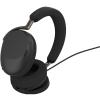
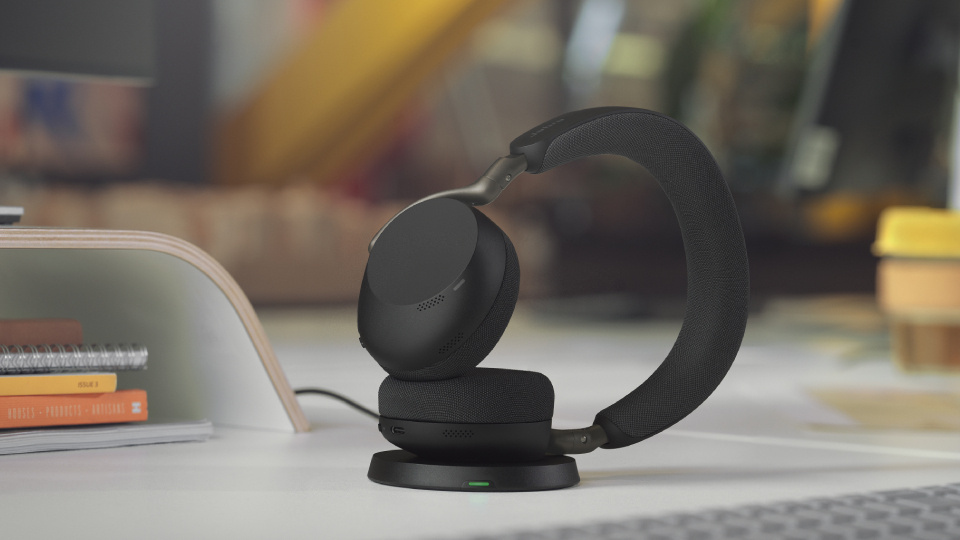
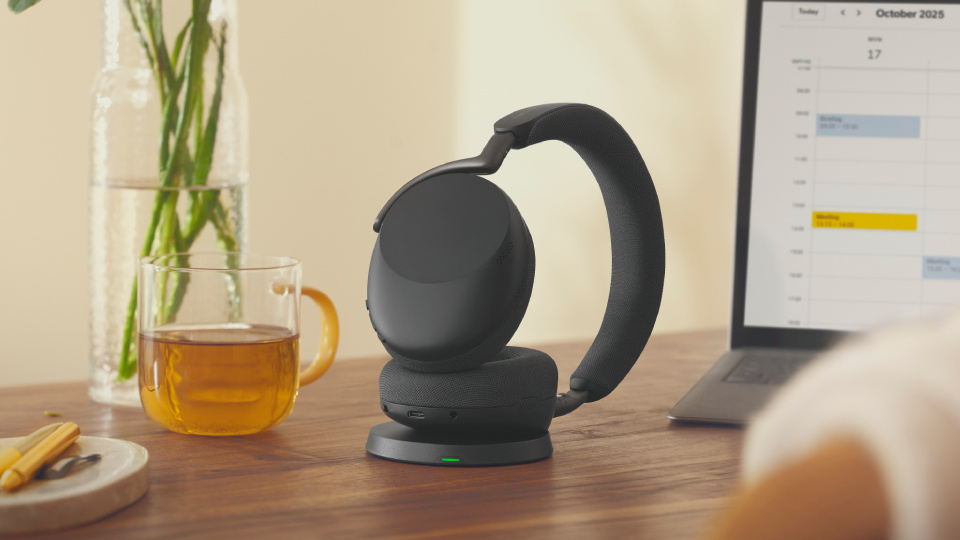
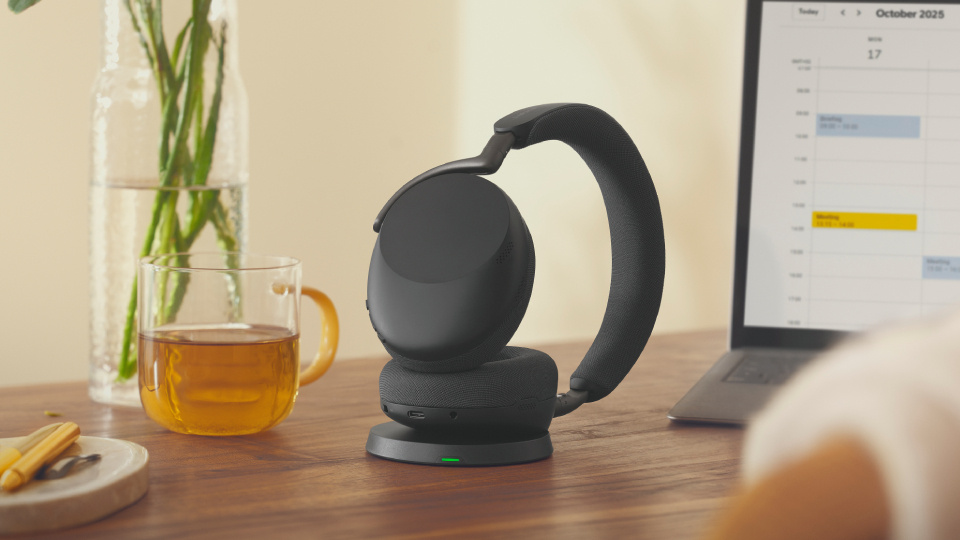
Both models charge via USB-C, and certain variants even support Qi wireless charging - so if you have a desk stand or charging pad, you can just set the headset down on it when not in use. This bit of convenience is especially nice in the hybrid work shuffle: you might leave the headset on a wireless charging stand at your office desk, pick it up for a meeting, then drop it on another charging pad at home later.
Battery longevity goes beyond daily runtime too. Not only are these batteries rated for strong endurance, but Jabra designed them to be replaceable down the line. This speaks to a larger focus on sustainability and product life: the ear cushions are also user-replaceable, and the whole build feels sturdy enough to last years. Jabra has incorporated some recycled materials into the construction and has an eye on meeting new eco standards (the Evolve3 series is TCO Certified for sustainability). It’s encouraging from both a green perspective and a buyer’s perspective - if you’re investing in a premium headset, you want it to serve you for the long haul.
Comfort and Design
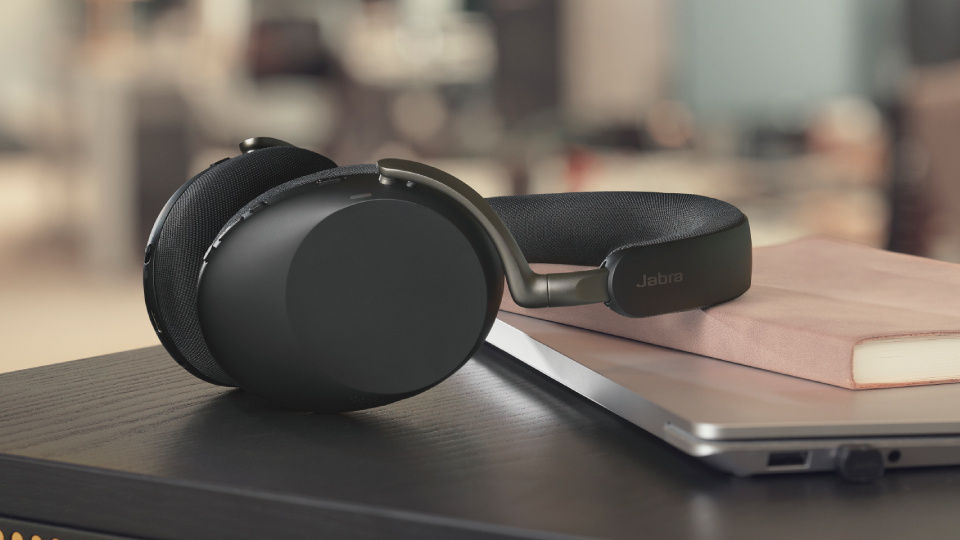
Though they share the same technologies, the Evolve3 75 and 85 wear very differently by design, and each will appeal to a certain user type. The Evolve3 75 is an on-ear headset, meaning its cushions rest on your ears rather than encircle them. This model is impressively lightweight at just 180 grams (about 6.3 ounces). For context, that’s lighter than many regular music headphones. You will feel the difference during long stretches of use - it exerts little pressure and is easy to forget about while wearing. The on-ear fit also allows a bit more of the outside world in. This can be a plus for those who want some situational awareness (say, to hear when someone’s trying to get your attention, or to not be completely oblivious to a fire alarm or boarding announcement). The trade-off is that on-ear cushions naturally block slightly less noise than over-ear ones; however, the active noise cancelling still does the heavy lifting when you need quiet, and you can always enable a HearThrough transparency mode to pipe in sound if needed.
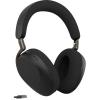
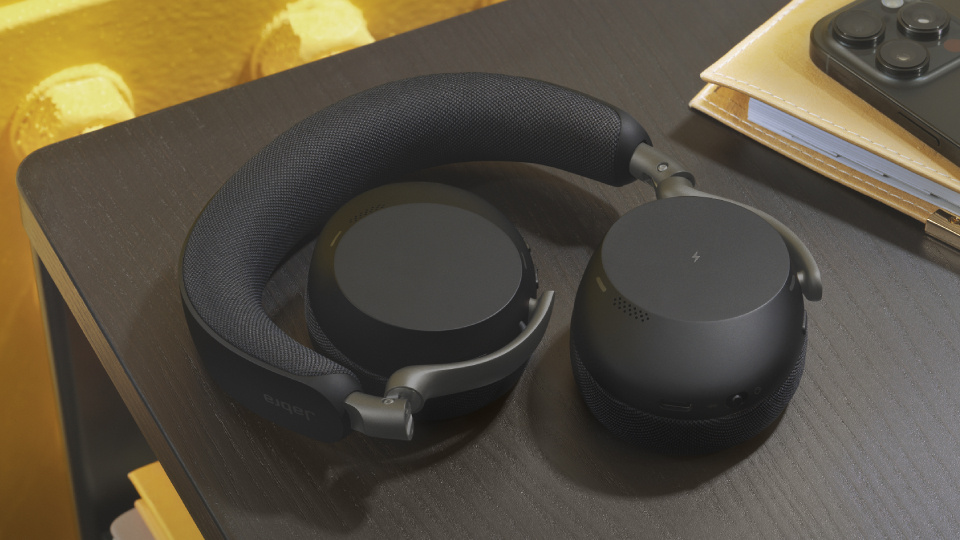
By contrast, the Evolve3 85 is an over-ear (around-the-ear) design, more akin to high-end ANC headphones like Bose or Sony models. Its padded earcups fully surround your ears, creating a gentle seal. This design yields maximum passive noise isolation – even before you turn on ANC, a lot of ambient noise gets hushed. The Evolve3 85 is built for users who prioritise immersive focus: if you spend your days in a noisy environment or you just love the feeling of being in your own sonic bubble, the 85 delivers that. It’s a bit heavier than the 75, at around 220 grams (7.8 ounces), but notably Jabra managed to make it 23% lighter than its predecessor (the Evolve2 85). In practice, it’s still very comfortable for an over-ear; the headband and cushions distribute weight well, and the clamping force is gentle enough that you shouldn’t experience any “squeeze” headaches after multi-hour wear. The ear cushions use a breathable material to avoid trapping too much heat – an important detail if you plan to wear these through marathon meetings.
Portability is another consideration. Both headsets are foldable and come with a soft carrying pouch. The Evolve3 75’s more compact frame makes it a tad easier to slip into a laptop bag. The 85’s case is slightly larger, but still quite manageable for an over-ear headset. If you travel frequently, either model will pack down nicely; you just have to decide if the added immersion of the 85 is worth the marginal extra bulk over the 75.
Choosing Between the Evolve3 75 and 85
Functionally, both models have the same feature set - AI mics, adaptive ANC, voice assistant integration, long battery life, etc. So your decision largely comes down to that form factor and usage style:
The Evolve3 85 (Over-Ear) is ideal if you often work in loud environments or just crave the most noise isolation and audio immersion. It’s the premium choice for those who want their headset to be a personal quiet zone. It might also appeal to users who will significantly use it for music and media, since over-ear headphones tend to offer a richer audio experience (and indeed, the 85 sounds fantastic for tunes). Despite being the more premium model, it’s impressively lightweight and low-profile for an over-ear device - you get high-end performance without a heavy feel.
The Evolve3 75 (On-Ear) is perfect if you prioritise mobility, lightness, and a bit more openness. It’s the better pick for people who move around a lot or don’t like the enclosed feeling of over-ears. If you’re frequently toggling between calls and in-person conversations, or you value that the headset looks slightly more subtle (smaller on the head), the 75 is a great choice. It still delivers outstanding call clarity and strong ANC for most situations; it’s only in extreme noise cases that the 85’s extra isolation would have a clear advantage.
In both cases, you’re getting a headset that can seamlessly transition from work to personal use. There are also variants of each (aimed at different unified communications platforms): for instance, a Microsoft Teams-certified version of each model has a dedicated Teams button and optimised software for Teams, while a UC version is tuned for general compatibility with Zoom, Cisco, and others. These variants don’t change the hardware, but it’s worth noting when ordering to get the one that matches your workflow. And each model can be bought with an optional charging stand or just a USB cable, depending on how you prefer to charge.
Future-Proofing the Work Headset
The Jabra Evolve3 75 and 85 mark a significant evolution in what a “work headset” can be. They’ve managed to combine many of the most desired features - outstanding microphone clarity, powerful noise cancellation, long battery life, comfortable build - while eliminating much of what people dislike about traditional headsets (namely, ungainly looks and cumbersome mics). Using the Evolve3 feels like a glimpse of the future: where you can talk to your AI assistant mid-stride, where being on a conference call doesn’t tether you to a quiet corner, and where your work device is sleek enough that you’re happy to wear it in public on the way home.
Importantly, the Evolve3 series doesn’t abandon its professional roots. Under the hood, these headsets come with the certifications and security that businesses need. They ship with USB adapters for plug-and-play PC connectivity, they use enterprise-grade encryption for the wireless link (keeping conversations secure), and they are compatible with Jabra’s device management platforms so an IT team can push updates or settings if these are deployed company-wide. In day-to-day use, you might not notice these things, but it means that the same headset you buy for yourself could also be approved by your company’s IT department - a scenario that’s increasingly common as workplaces offer stipends for employees’ home office gear.
All told, the Jabra Evolve3 75 and 85 succeed in painting a picture of what the “future of professional business headsets” can look like: gear that empowers you to sound your best and work your best, wherever you are, without compromising on style or comfort. For the growing cohort of hybrid workers and prosumers, that future-ready approach makes the Evolve3 series a compelling option in the present.