
If you’ve never touched a portable power station before, the product pages can feel like they’re shouting numbers at you. Watts, watt hours, amps, ports, solar input, UPS, LiFePO4. It can get overwhelming fast. The good news is you don’t need an electrical engineering degree to pick the right one.
Let’s break down Anker’s latest SOLIX lineup at PB Tech in a way that makes sense, whether you’re a first timer, a casual camper, or someone who never wants their Wi-Fi to die ever again.
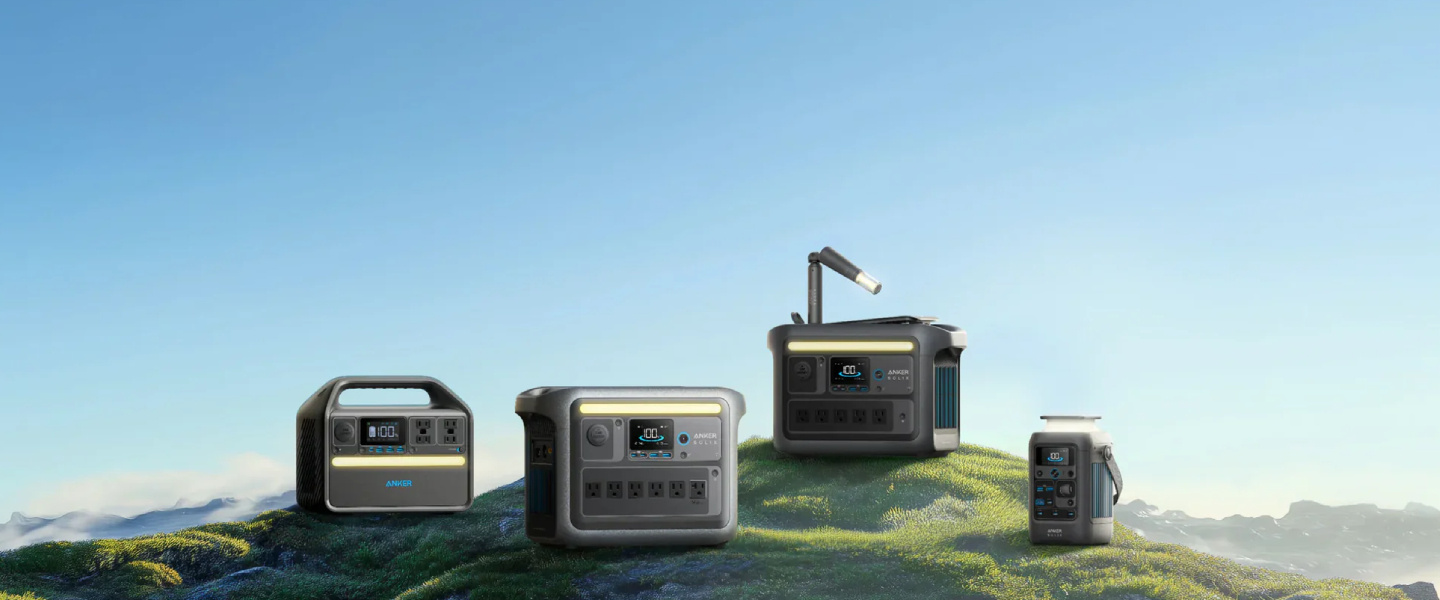
There are four new power stations and three new solar panels here, each designed for slightly different jobs. We’ll walk through what each one does, who they’re for, and why the new SOLIX range is definitely worth a look.
POWER STATIONS 101 (For Beginners)
A portable power station is basically a big rechargeable battery that can power or charge your devices. Instead of relying on wall power, these units store energy and let you use it anywhere. At the beach, during storms, on road trips, in the backyard, or when your flat randomly loses power because a pigeon flew into the powerline again.
Some key terms you’ll see:
Wh (watt hours) - how long it lasts. Think of it like the size of the fuel tank.
W (watts) - how much it can power at once. Like the engine power.
LiFePO4 battery - advanced battery tech that lasts years longer than normal lithium batteries.
Solar input - lets you recharge using solar panels.
Surge power - short bursts of extra power for appliances that kick when turning on.
Anker’s SOLIX range uses long-lasting LiFePO4 cells, charges extremely fast, and is known for being quiet, reliable, and very beginner-friendly.
Now let’s meet the actual units.
THE POWER STATION LINEUP
Anker SOLIX C300 DC. Pocket-Sized Power for First Timers


288Wh | 300W | 90Ah | Integrated lantern | 7 ports
If you’re dipping your toes into portable power for the first time, this is the easiest entry point. The C300 DC is super compact but still delivers 300W output and 288Wh capacity. You get fast 140W USB C charging, USB A, a car socket, and even an integrated lantern that’s genuinely handy on a campsite or during outages.
Perfect for phone and laptop charging, camera gear, camping lights, small fans, routers, car fridges, or anyone who wants something simple but not weak.


Anker SOLIX C300. Same Size, More Versatility with Built-In UPS


288Wh | 300W (600W surge) | 2 AC sockets | UPS (10ms)
This is the more flexible version of the C300 line. You get AC ports for powering appliances, near-silent 25dB operation, fast 50-minute recharge to 80 percent, and a 10ms UPS mode. That means it can keep your Wi Fi or PC running if the power cuts.
Perfect for apartment dwellers, students, people who work from home and want outage protection, car camping, or powering projectors and small appliances.

Anker SOLIX C1000. The Best Balance of Power and Portability


1056Wh | 1800W output | 2400W surge | 600W solar input | 11 ports
This is the crowd pleaser. The C1000 has a large 1056Wh battery, can run most home appliances, includes four AC outlets, USB A, and USB C up to 100W, and supports up to 600W solar input. It also fast-charges incredibly quickly. Around 80 percent in 43 minutes and full in under an hour.
It’s expandable too, meaning you can add more battery capacity later.
Perfect for caravans, long weekends off-grid, multi-device families, power tools, gaming setups, and emergency home backup. If you want something ready for anything, it’s this one.

Anker SOLIX F2000. The Heavy Duty Unit for Serious Power Needs


2048Wh | 2400W output | 1000W solar input
This is the “power half the house” tier. The F2000 stores a huge 2048Wh, offers 2.4kW continuous output, multiple AC and USB C ports, and supports up to 1000W solar input for very fast recharging. It also goes from 0 to 80 percent in about 1.4 hours thanks to HyperFlash charging.
Perfect for fridges, power tools, multi day outages, RVs, off grid cabins, households preparing for storms, or anyone who wants to just keep everything running.

SOLAR PANEL BASICS (For Beginners)
A solar panel doesn’t directly charge your devices. It charges your power station, which then charges your devices. Think of the panel as the faucet and the power station as the tank.
Things that matter:
- Wattage equals charging speed.
- Conversion efficiency equals how well it converts sunlight.
- IP67 equals waterproof and dustproof.
- Adjustable angles mean better sunlight capture.
Anker’s PS series panels use monocrystalline cells with high efficiency and are designed to be foldable and travel-friendly.
THE SOLAR PANEL LINEUP
Anker SOLIX PS100. Light, Fast, and Easy

100W | Up to 23 percent efficiency | IP67 | 4 angles
Small, tough, and perfect for beginners. The PS100 offers up to 23 percent conversion efficiency, four angle settings, and IP67 waterproofing, while staying lightweight and easy to fold.
Pairs best with the C300 models or the C1000 for slower, steady charging.

Anker SOLIX PS200. Double the Power for Faster Charging
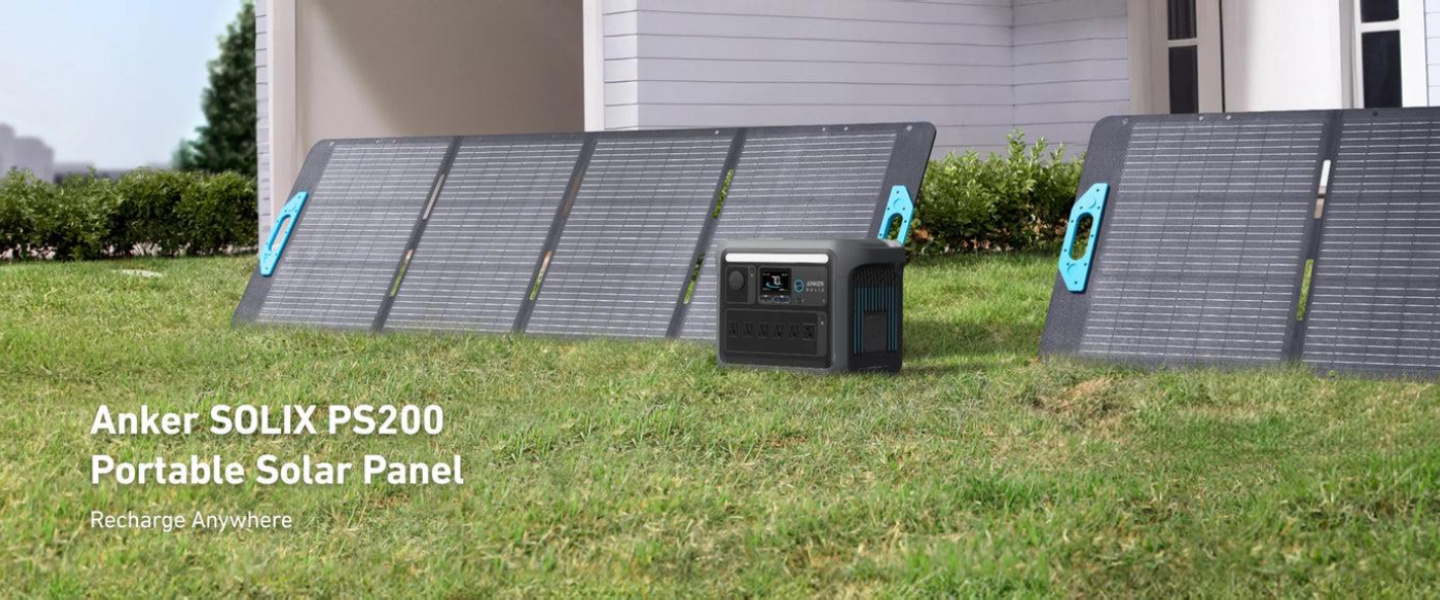
200W | Up to 23 percent efficiency | IP67 | 4 angles | XT60 and MC4
Twice the wattage means much faster recharging. The PS200 uses 23 percent efficiency monocrystalline cells, offers four adjustable angles, and is fully IP67 waterproof. It’s ideal for serious off grid use or charging mid range power stations quickly.
Pairs best with C1000 owners, van setups, or anyone planning multi day trips.

Anker SOLIX PS400. The Big Solar Panel for Big Energy Needs
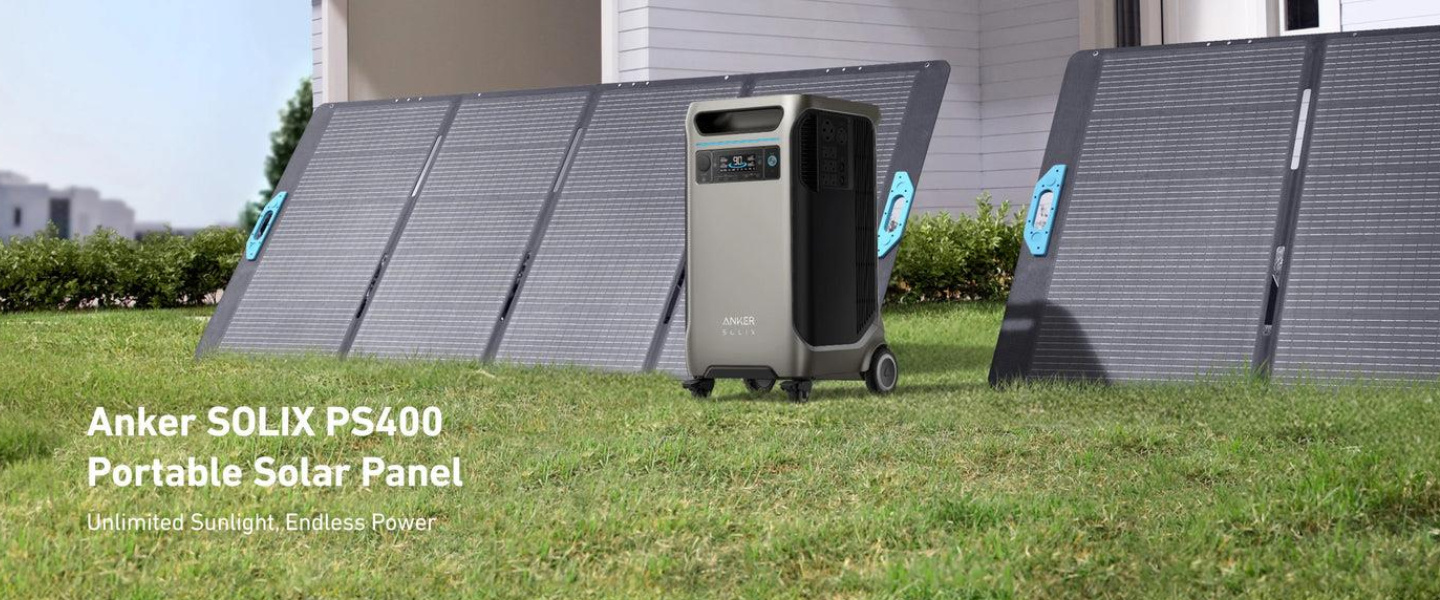
400W | Up to 23 percent efficiency | IP67 | 4 angles
The PS400 is a powerhouse panel. With 400W output, high efficiency, and rugged protection, it can refill large stations like the C1000 or F2000 rapidly. Great for home backup or extended off grid setups.
Pairs best with the F2000, C1000 with an expansion battery, RVs, cabins, or home backup systems.

Power Up Now
Here’s the nice thing. Portable power isn’t complicated anymore. Anker’s SOLIX range takes care of the confusing parts like safety, battery longevity, charging speed, and compatibility. All you have to do is pick the size that matches how much power you want and how long you want it to last.
You don’t need to know what LiFePO4 stands for, but you will appreciate that it lasts for thousands of cycles. You don’t need to understand MPPT solar controllers, but you will love that your station charges faster in the sun. And you definitely don’t need to be a prepper to enjoy the peace of mind these things offer.