
If you game online, your internet connection matters just as much as your hardware. Lag, rubber-banding, hit registration issues, and random disconnects can all come down to how your device connects to the network. That leads to a common question: is Ethernet actually better than Wi-Fi for gaming, or does it no longer matter?
The short answer is yes, Ethernet is usually better. The long answer depends on what kind of gaming you do and how your setup is configured.
Latency Is the Biggest Factor
For gaming, latency matters more than raw download speed.
Latency is the delay between your action and the game server responding. Lower latency means faster, more responsive gameplay. This is especially important for competitive multiplayer games like shooters, racing games, and sports titles.
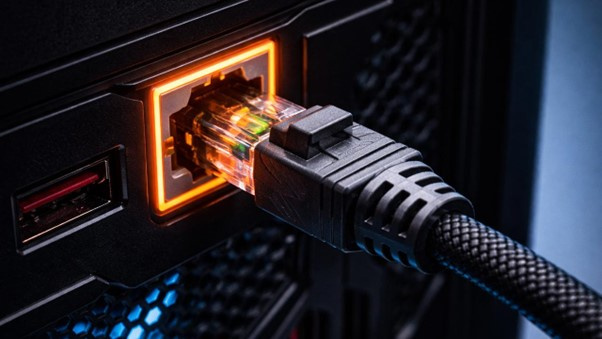
Ethernet has a clear advantage here. A wired connection sends data directly between your device and the router with minimal interference. Wi-Fi sends data through the air, which introduces additional delay and variability.
Even a small increase in latency can be noticeable in fast-paced games.
Stability Beats Speed
Wi-Fi speeds can look impressive on paper, but stability is where Ethernet wins.
Wi-Fi performance can fluctuate due to:
- Distance from the router
- Walls and floors
- Other devices using the same wireless network
- Interference from neighbouring networks
Ethernet does not have these problems. Once plugged in, the connection is consistent. That consistency reduces packet loss, jitter, and sudden lag spikes, all of which negatively affect gaming.
For online gaming, a steady connection is far more important than peak speed.
Packet Loss and Jitter
Packet loss happens when data does not reach its destination. Jitter refers to variation in latency over time. Both are bad for gaming.
Wi-Fi is more prone to both, especially in busy households or apartment buildings. Microwaves, Bluetooth devices, and even other Wi-Fi networks can interfere with your signal.
Ethernet connections experience far less packet loss and jitter, making gameplay smoother and more predictable.
Bandwidth Sharing on Wi-Fi
When multiple devices use Wi-Fi at the same time, they compete for airtime.
Streaming video, video calls, cloud backups, and smart home devices can all affect Wi-Fi performance, even if your internet speed is high. This can introduce lag at the worst possible moments.
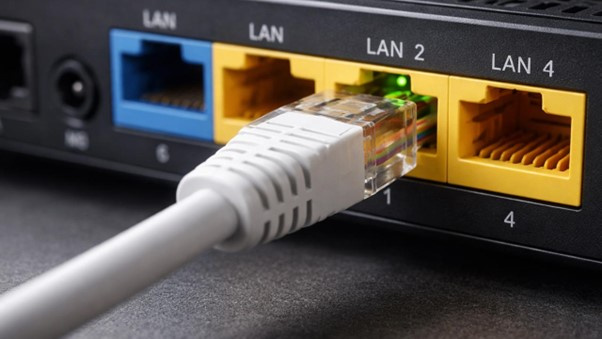
With Ethernet, your gaming device has a dedicated connection to the router. While your internet connection is still shared, the local connection is not competing wirelessly.
Modern Wi-Fi Is Better Than It Used to Be
That said, modern Wi-Fi has improved significantly.
Wi-Fi 5 and Wi-Fi 6 routers offer:
- Higher speeds
- Better handling of multiple devices
- Improved range and efficiency
In a well-set-up home, Wi-Fi can be good enough for casual and even semi-competitive gaming. If you are close to the router, using a clean channel, and not sharing the network heavily, Wi-Fi performance can be very solid.
However, it still cannot match the consistency of Ethernet.
What About Consoles and PCs?
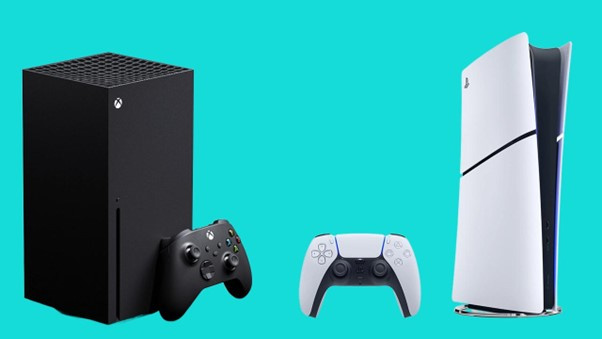
For consoles and gaming PCs, Ethernet is almost always the better choice if it is practical.
These systems benefit the most from:
- Lower latency
- Stable connections during long gaming sessions
- Fewer random drops or spikes
Most competitive players use Ethernet for a reason. It removes variables that Wi-Fi simply cannot eliminate.
Gaming on Phones and Tablets
Mobile gaming is a different situation.
Phones and tablets rely entirely on Wi-Fi or mobile data. In this case, the quality of your Wi-Fi setup matters a lot. Strong signal, modern routers, and minimal interference make a noticeable difference.
If your router supports it, features like prioritising gaming traffic can help improve the experience over Wi-Fi.
So Which Should You Use?
If you have the option, Ethernet is the better choice for gaming. It offers lower latency, better stability, and fewer issues caused by interference.
Wi-Fi is perfectly usable for gaming, especially with modern routers and good signal quality, but it is more variable and less predictable.
If you care about competitive performance, consistency, or avoiding random lag spikes, Ethernet is the clear winner. If convenience matters more and your Wi-Fi setup is solid, gaming over Wi-Fi can still be a good experience.